
Pear Shaped Diamond Engagement Rings
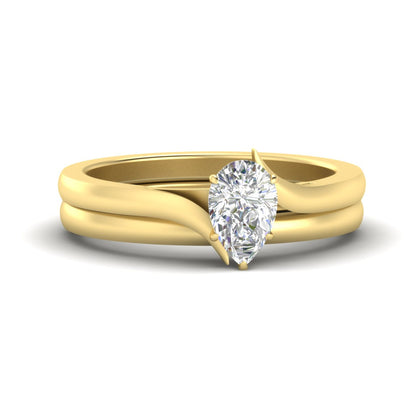
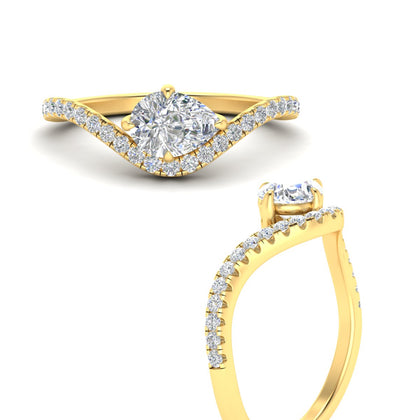
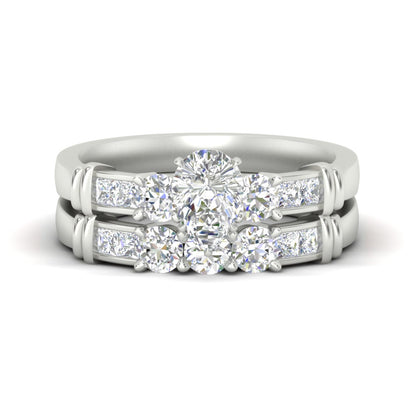
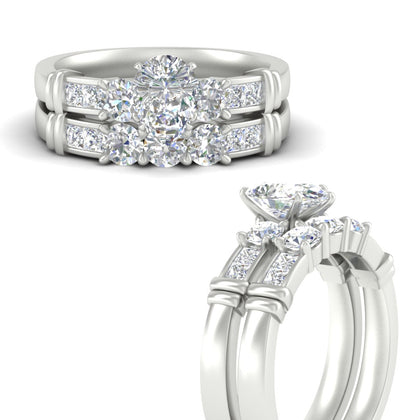
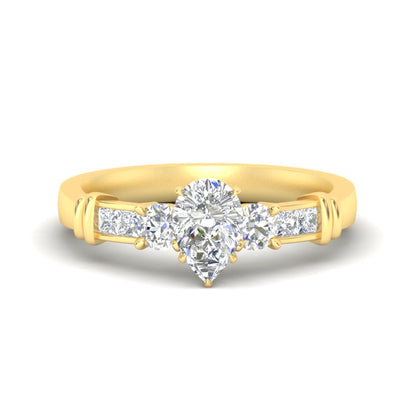
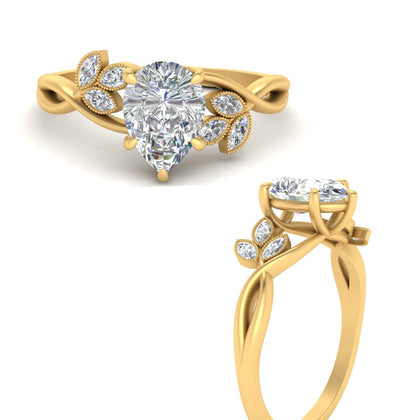
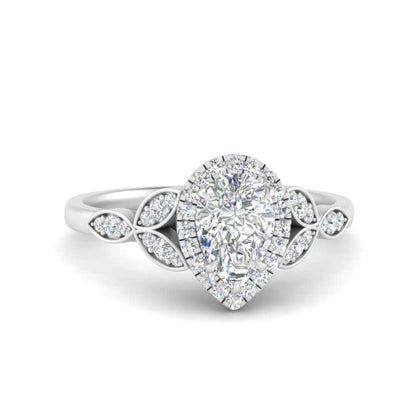
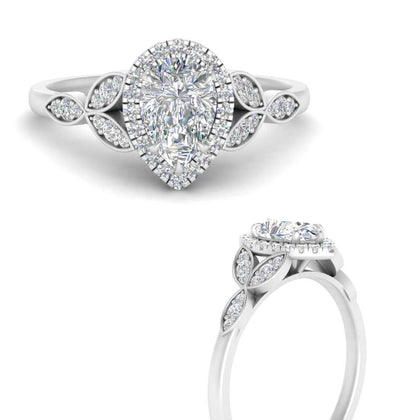
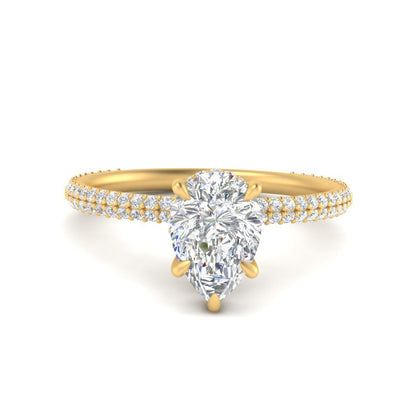
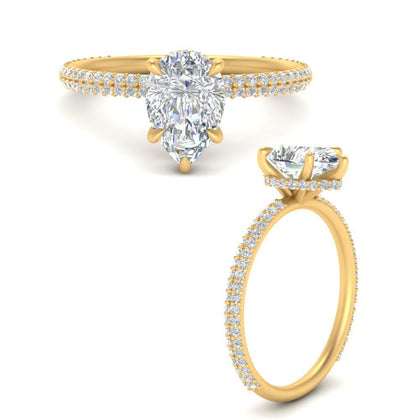
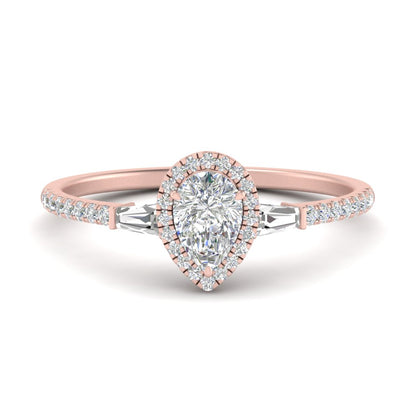
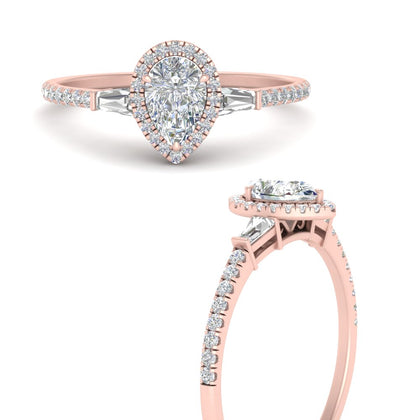
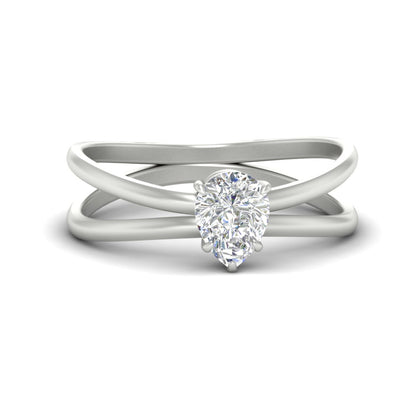
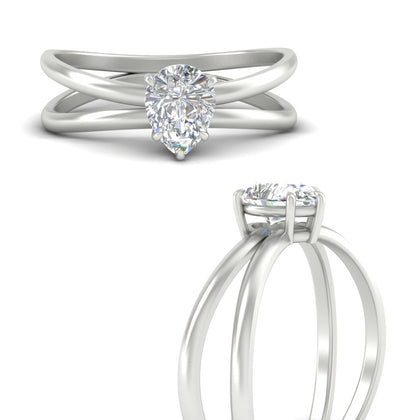
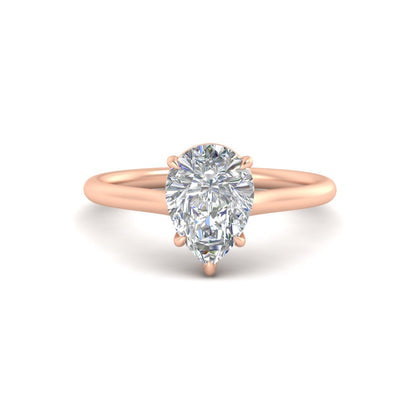
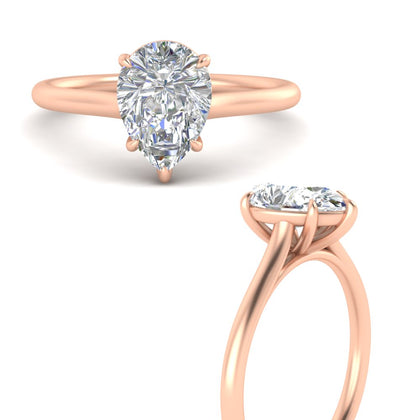
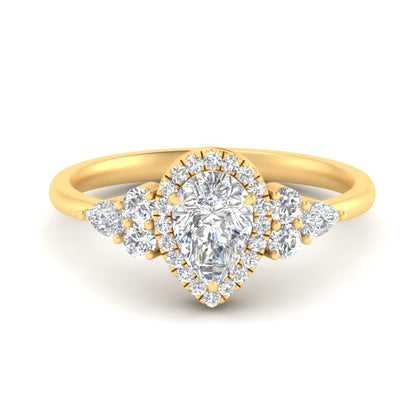
Pear shaped diamond engagement rings feature a hybrid brilliant cut that combines the rounded end of an oval with a single tapered point, producing an elongated teardrop silhouette with 58 facets and strong light return. The asymmetrical outline creates one of the most distinctive profiles in fine jewelry while delivering finger-lengthening coverage and a face-up appearance that reads larger than round or cushion diamonds at the same carat weight. Fascinating Diamonds offers 100+ pear shaped engagement rings in natural and lab grown diamonds. Available in solitaire, halo, hidden halo, three-stone, and east-west settings in platinum, white gold, yellow gold, and rose gold.
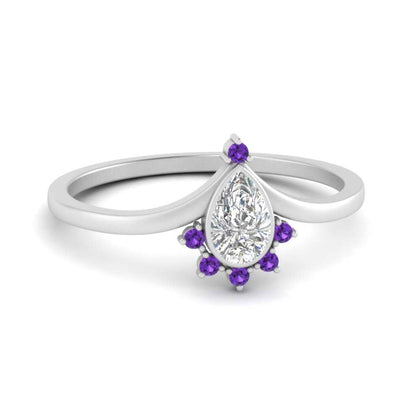
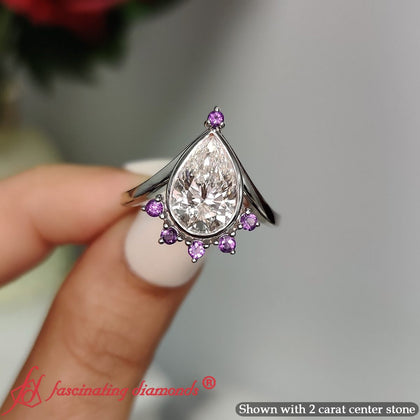
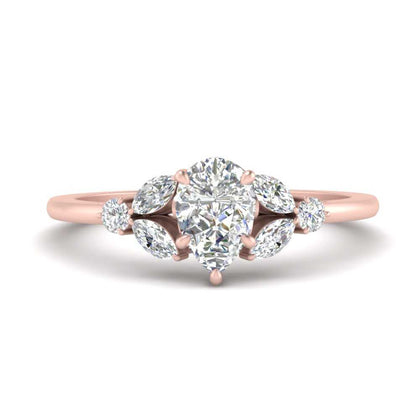
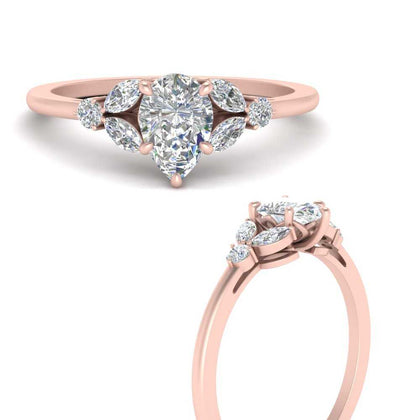
Explore Our Pear Shaped Engagement Rings Collection
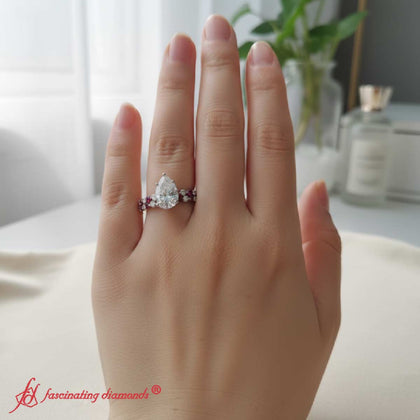
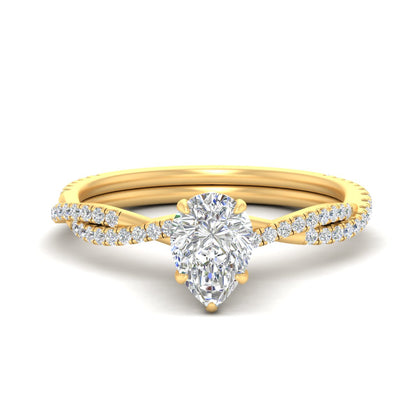
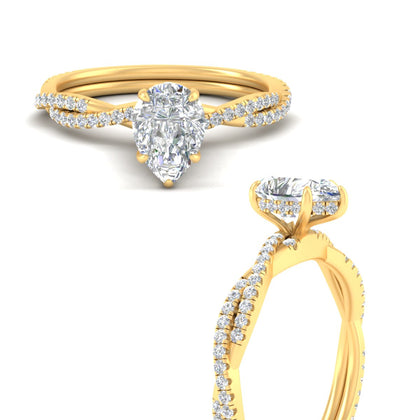
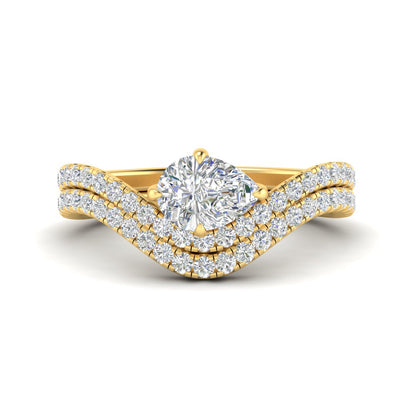
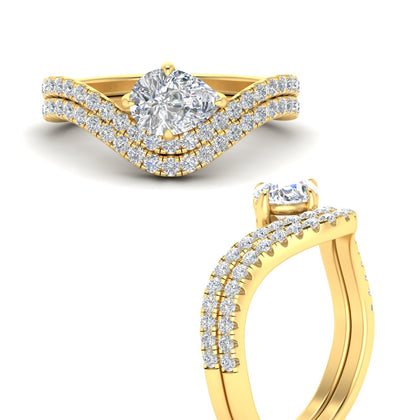
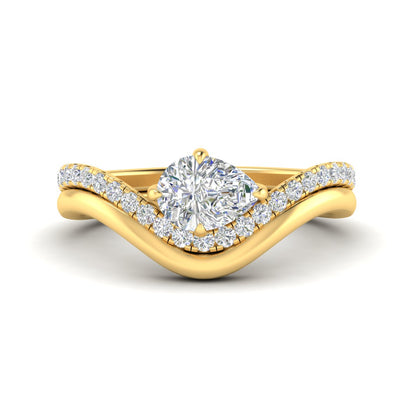
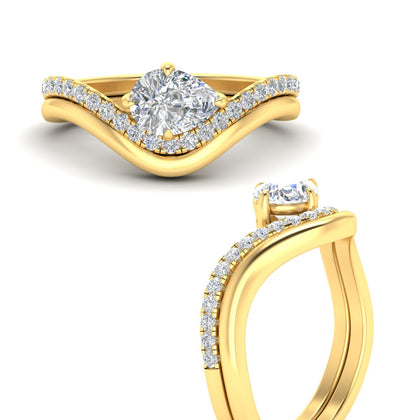
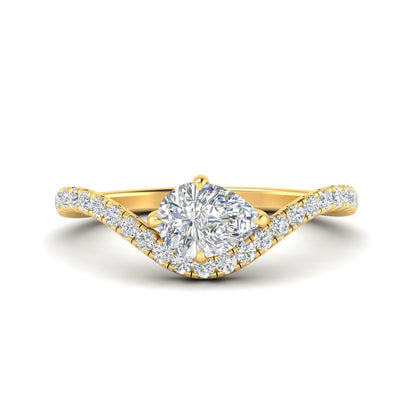
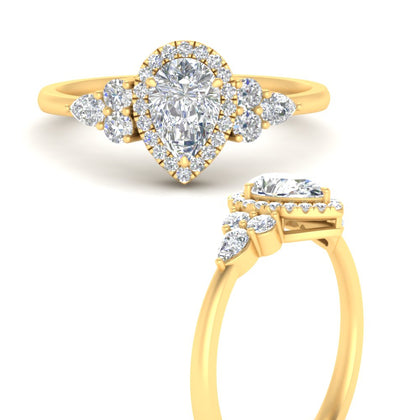
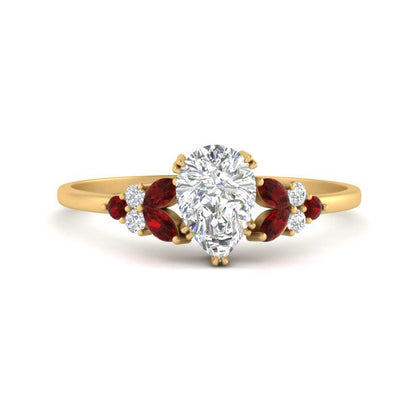
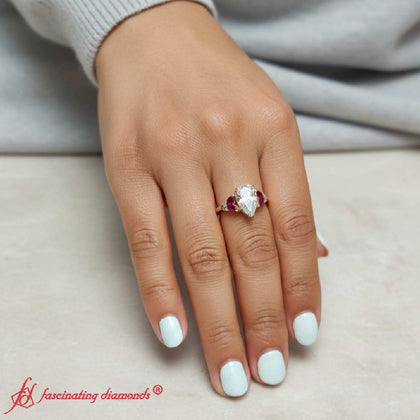

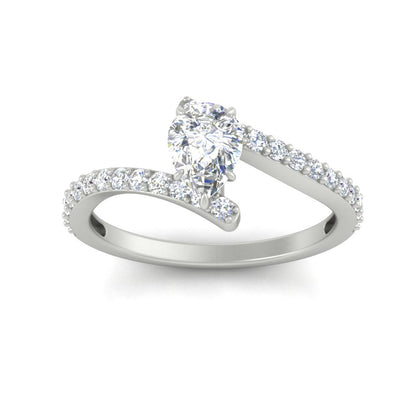
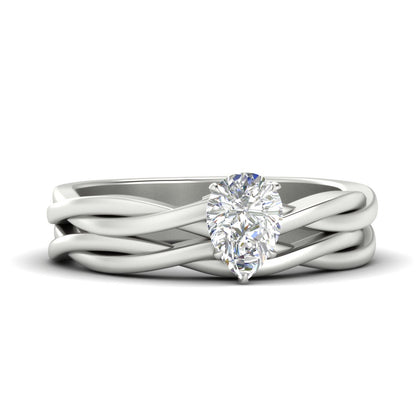
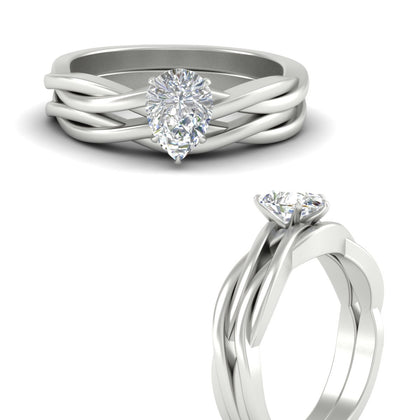
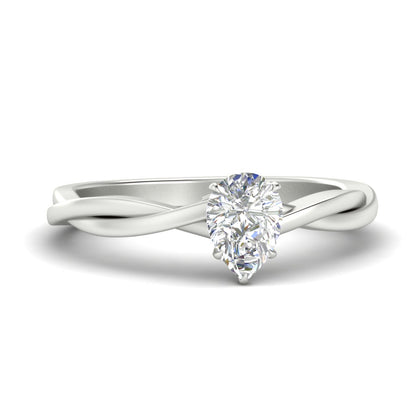
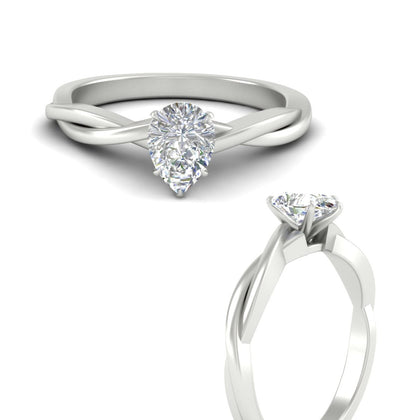
Real Customer Reviews
Pear Shaped Diamond Engagement Rings: The Complete Guide
Pear shaped diamonds occupy a specific position in the market that's worth understanding before choosing one. They're the most asymmetrical of the mainstream brilliant cuts — one end fully rounded, one end pointed — which makes them more technically demanding to cut well than ovals or rounds. That asymmetry is also exactly what makes them compelling. A well-cut pear shaped diamond has a silhouette that's immediately recognizable, distinctly elegant, and unlike any other shape on the hand. It reads as a deliberate choice rather than a default one, which is why pear shaped engagement rings have seen sustained demand growth over the past decade alongside oval and marquise cuts. If you're also considering pear shaped diamonds for earrings, see Teardrop Diamond Earrings Explained: Why Pear Shaped Diamonds Look Bigger for a full breakdown of how the shape performs in earring settings.
The pear shape is classified as a modified brilliant cut, sharing its facet structure with the round brilliant but adapted to fit the elongated, asymmetrical outline. A well-cut pear should show consistent brilliance from the rounded shoulder down through the point, with no dark areas, no uneven lobes, and no visible bow-tie severe enough to interrupt the stone's light performance. Getting all of those qualities together in a single stone is what separates a good pear shaped diamond from a great one.
Pear Shaped Diamond Proportions: Length-to-Width Ratio
The length-to-width ratio is the primary proportional decision for a pear shaped diamond and determines how elongated or compact the stone appears from above. The standard recommended range is 1.45 to 1.75. A ratio at the lower end, around 1.45 to 1.55, produces a wider, fuller pear with a more rounded body and a less dramatic elongation. A ratio at the higher end, around 1.65 to 1.75, produces a slender, dramatically elongated pear with maximum finger-lengthening effect and a more fashion-forward silhouette.
Most buyers find the 1.50 to 1.65 range to be the most balanced, offering clear elongation without the stone looking overly narrow or fragile at the point. Ratios below 1.45 start to look stubby and lose the defining teardrop characteristic. Ratios above 1.75 can look very elongated and make the bow-tie effect more visible at the center.
For shorter or wider fingers, a ratio closer to 1.65 to 1.75 maximizes the lengthening effect most effectively. For longer fingers, a fuller ratio around 1.45 to 1.55 fills the finger proportionally without looking disproportionately narrow.
The Bow-Tie Effect in Pear Shaped Diamonds
The bow-tie effect is a dark shadow running horizontally across the center of pear shaped diamonds, caused by light exiting through the bottom of the stone rather than reflecting back to the eye. It appears as a dark band at the widest point of the diamond and is present to some degree in virtually all pear cuts, as well as other elongated shapes like oval and marquise.
The key distinction is between a faint bow-tie, which is normal and essentially invisible once the ring is on a moving hand, and a severe bow-tie, which is a cut quality problem that visibly darkens the center of the stone and reduces overall brilliance. A faint bow-tie is acceptable. A strong, dark bow-tie should be avoided entirely regardless of how good the other quality grades are.
Bow-tie severity doesn't appear on a GIA or IGI grading report. It's a visual characteristic that must be assessed through video or direct inspection of the specific stone. When evaluating pear shaped diamonds at Fascinating Diamonds, always request stone-specific video before purchasing so you can assess the bow-tie under different lighting conditions.
Tip Up or Tip Down: Pear Shape Orientation Explained
One of the most distinctive and underappreciated aspects of the pear shaped diamond is that it can be set in two different orientations, each producing a meaningfully different aesthetic.
Tip up, also called north-south orientation, positions the pointed end toward the fingernail. This is the traditional and most common orientation. It creates the strongest finger-lengthening effect because the eye follows the diamond's length vertically along the finger. In a solitaire setting, a tip-up pear produces a clean, elegant silhouette that reads as classic and refined.
Tip down orientation rotates the stone so the rounded end faces toward the fingernail and the point faces toward the hand. This produces a softer, more rounded top profile and a slightly different visual weight distribution across the finger. Tip-down pear rings have a more contemporary, less conventional feel and have been gaining popularity in east-west and modern solitaire settings. Neither orientation is technically superior. The choice comes down entirely to aesthetic preference and how the stone sits relative to the wearer's hand proportions.
Pear Shaped Diamond vs. Other Diamond Shapes
Pear vs. Round: Round brilliant diamonds produce the highest light return of any diamond shape through their optimized 57-facet arrangement. Pear cuts produce comparable brilliance with a distinctly different, elongated silhouette. Pear shaped diamonds typically cost 20 to 30 percent less per carat than round diamonds at equivalent quality grades, making them a strong value choice for buyers who want brilliant-cut sparkle with more finger coverage and visual presence.
Pear vs. Oval: Both shapes elongate the finger, but pear cuts taper to a single point while ovals have fully rounded ends. Ovals are symmetrical and require no special orientation decision. Pear cuts are asymmetrical and offer the additional design variable of tip-up vs. tip-down orientation. Oval cuts are currently more popular overall, which means pear shaped engagement rings are a stronger choice for buyers who want something with a more distinctive, less common profile.
Pear vs. Marquise: Both shapes have a pointed tip requiring a V-prong, but marquise cuts have pointed tips at both ends while pear cuts have one rounded end and one point. Marquise cuts are fully symmetrical and produce the largest face-up appearance of any shape. Pear cuts are asymmetrical and have a softer, more approachable silhouette. Both elongate the finger effectively, but the pear's teardrop outline is more universally flattering across different hand types.
Pear vs. Heart: Both shapes have a single pointed tip requiring a V-prong and both carry strong emotional associations. Heart cuts are symmetrical and explicitly symbolic. Pear cuts are more versatile stylistically and carry less overt symbolism, which makes them a stronger choice for buyers who want a distinctive shape without the heart's explicit romantic declaration.
Best Settings for Pear Shaped Engagement Rings
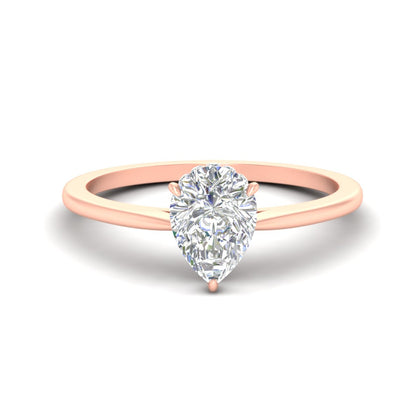
Solitaire: A five-prong solitaire is the most common and recommended setting for a pear shaped diamond. Three prongs secure the rounded shoulder and two prongs, including the critical V-prong, protect the point. The V-prong at the tip is non-negotiable. Without it, the point is directly exposed and vulnerable to chipping on impact. A thin, plain band keeps visual focus on the center stone and complements the pear's elongated silhouette without adding competing visual weight.
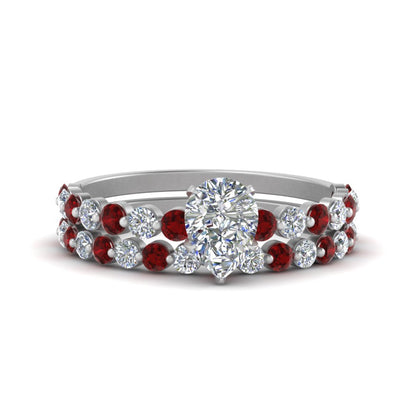
Halo: A halo of round accent diamonds traces the pear's outline, reinforcing the teardrop silhouette and significantly amplifying the apparent size of the center stone. A well-proportioned halo on a 1-carat pear shaped diamond can produce the visual impression of a 1.4 to 1.5-carat stone. The halo also frames the stone's asymmetrical outline, making the pear shape read more clearly from a distance.
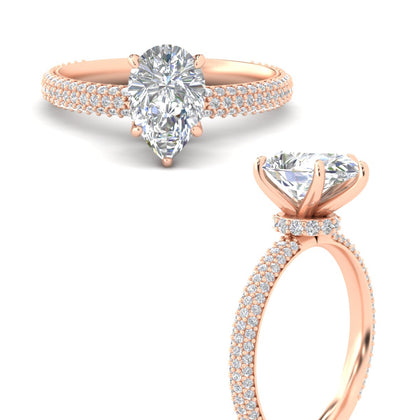
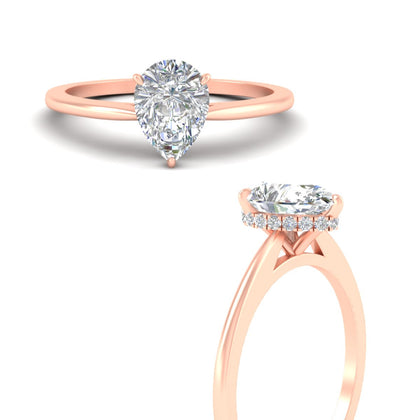
Hidden halo: A hidden halo places accent diamonds beneath the girdle of the center stone, invisible from directly above but visible from side angles. The result is a ring that presents as a clean solitaire from the top while showing additional brilliance and depth when viewed from the side. This setting suits buyers who want the size-enhancing benefit of accent diamonds with a minimalist profile.
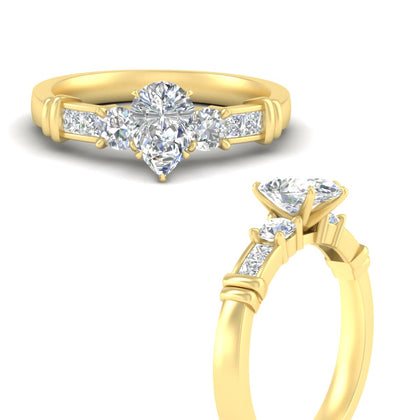
Three-stone: Flanking a pear center stone with two matching pears or tapered baguettes creates a balanced, symmetrical composition despite the pear's inherent asymmetry. The side stones add carat weight and visual presence, and the three-stone format carries the traditional symbolism of past, present, and future. This is a strong choice for buyers who want a more substantial ring without increasing the center stone size.
East-west: An east-west setting rotates the pear 90 degrees so its length runs horizontally across the finger. This modern orientation works particularly well with the tip-down variation and creates a bold, architectural look that's distinctly contemporary. East-west pear rings in yellow gold are currently one of the strongest trending styles across non-traditional engagement ring searches.
Natural vs. Lab Grown Pear Shaped Engagement Rings
Fascinating Diamonds offers pear shaped engagement rings in both natural and lab grown diamonds across all carat weights, settings, and metal types. Natural pear shaped diamonds are GIA or IGI certified and carry the rarity and provenance associated with mined stones. Lab grown pear shaped diamonds are chemically, physically, and optically identical to natural diamonds and typically cost 50 to 70 percent less per carat at equivalent quality grades.
For pear cuts specifically, lab grown options are worth serious consideration. Because bow-tie severity and symmetry quality are so critical to this shape, the lower cost per carat gives you the flexibility to evaluate more stones and be selective about cut quality without exceeding your budget. That level of selectivity is significantly harder to maintain at natural diamond price points for the same carat weight.
Metal Options for Pear Shaped Engagement Rings
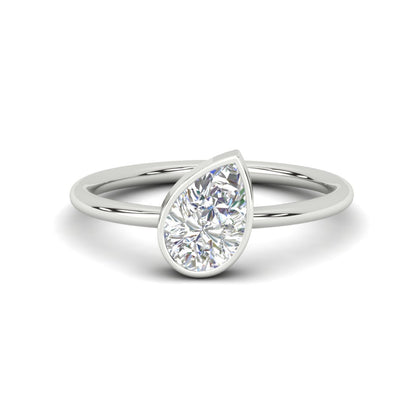
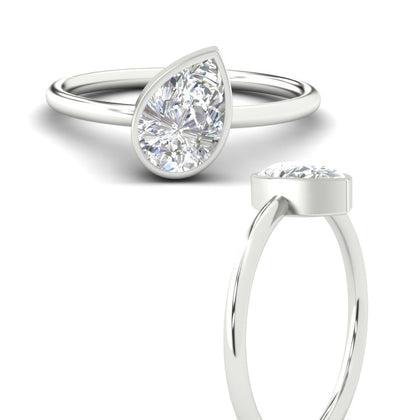
Platinum and white gold are the most popular metal choices for pear shaped rings. The cool, neutral tone creates a clean backdrop that maximizes the diamond's brightness and lets the teardrop silhouette read clearly. White gold is more affordable. Platinum is denser, more durable over time, and maintains its white color without rhodium replating.
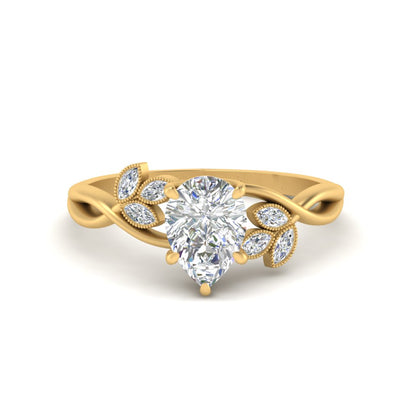
Yellow gold pairs especially well with pear shaped diamonds in the G-J color range. The warm metal tone complements the diamond's natural fire and creates a rich, vintage-adjacent look that's one of the strongest current trends in fine jewelry. Yellow gold pear solitaires and east-west settings are among the most searched pear ring styles.
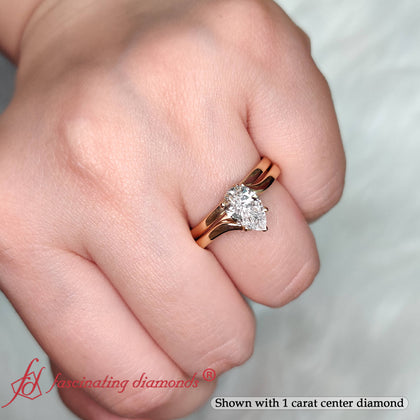
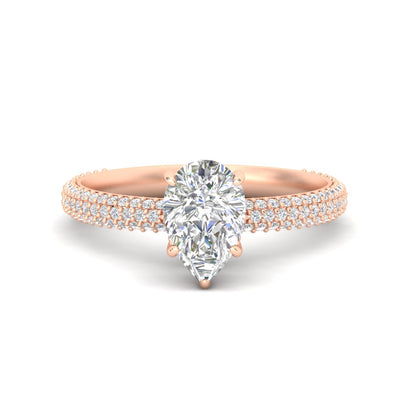
Rose gold softens the pear shape's pointed silhouette and creates a romantic, contemporary combination. It works particularly well in halo and pavé settings where the blush metal tone interacts with the sparkle of the accent stones to produce a warm, layered brilliance.
Shop Pear Shaped Engagement Rings at Fascinating Diamonds
Every pear shaped engagement ring at Fascinating Diamonds is manufactured in the USA and available with full customization across setting style, metal type, carat weight, and diamond origin. Contact our team at +1 (212) 840-1811 for stone-specific guidance, including bow-tie assessment and orientation recommendations. Free shipping and easy returns on all orders.
FAQs For Pear Shaped Diamond Engagement Rings
Do pear shape engagement rings look bigger than round diamonds?
Yes. Pear shape diamonds typically appear larger than round diamonds of the same carat weight due to their elongated shape.
What is the best ratio for a pear shaped diamond?
Most buyers prefer a ratio between 1.45 and 1.75 for balanced proportions and strong sparkle.
Do pear shaped diamonds show a bow-tie effect?
Some pear shaped diamonds may show a bow-tie effect, but careful selection and proper setting minimize this issue.
Are pear shape diamonds fragile?
Pear shaped diamonds aren't fragile, but the single pointed tip is the most vulnerable part of the stone and requires a well-designed V-prong to protect it from chipping on impact. Diamond is the hardest natural material, but thin pointed edges can chip if struck at the right angle with enough force. With a secure V-prong and a properly constructed setting, pear shaped engagement rings are fully suitable for everyday wear. The rounded shoulder of the pear is not vulnerable and doesn't require special prong treatment.
Are lab grown pear shape engagement rings worth it?
Yes, and particularly for this shape. Because pear cuts are sensitive to bow-tie severity and symmetry quality, the lower cost per carat of lab grown options gives you more flexibility to be selective. You can evaluate more stones, reject those with visible bow-tie, and still prioritize color and clarity grade within budget. Lab grown pear shaped diamonds are chemically and optically identical to natural diamonds and typically cost 50 to 70 percent less at equivalent quality grades.
What wedding bands pair best with pear shape engagement rings?
Curved or contoured wedding bands are the most practical pairing for pear shaped engagement rings. The pear's asymmetrical outline and tapered point create an uneven profile that leaves a gap against a straight band. A curved band is designed to nestle flush against the engagement ring's profile, eliminating the gap and creating an integrated look. Slim curved pavé bands in matching metal are the most popular choice. Straight bands can be stacked separately but won't sit flush against the ring's profile.